The Good, the Bad and the Ugly
Where the DNA of The Good, the Bad and the Ugly travels
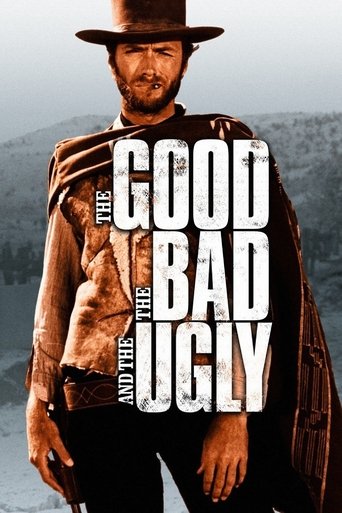
Films it shaped
-
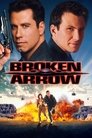
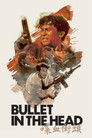
Woo stated, 'I love Sergio Leone and Jean-Pierre Melville's style, the characterization, the way they built up the tension, the quiet moments that turn into a storm. That's what I learned from them.' He specifically cited *The Good, the Bad and the Ugly* (Leone) and *Le Samouraï* (Melville) as inspirations for his approach to character and suspense in his films, including his Hollywood blockbusters like *Broken Arrow*.
-
I've always said that Jean-Pierre Melville and Sergio Leone are my two favorite directors. They taught me how to put humanity into action movies. That's why my movies are different from a lot of action movies.
-
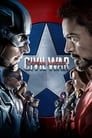
And then Civil War we were looking at Seven, Godfather, Fargo, Good, Bad, Ugly.
-
Harry Potter and the Deathly Hallows: Part 2 Atlas note
David Yates wanted the final Harry-Voldemort confrontation to feel inevitable, mythic, decided by fate rather than skill. He watched Sergio Leone's The Good, the Bad and the Ugly and saw how Leone built the tension: extreme close-ups of eyes, the score building across unbearable silence, death arriving as punctuation. Yates borrowed Leone's grammar for the duel. In a 2011 Los Angeles Times interview, he was explicit about this influence. The Good, the Bad and the Ugly streams on Criterion Channel.
-
Puss in Boots Atlas note
Director Chris Miller watched Sergio Leone's The Good, the Bad and the Ugly obsessively, studying the extreme close-ups on gunslingers' faces, the squint, the sweat before violence. He mapped Leone's visual language directly onto an animated cat, using split-screens and extreme facial close-ups to build comedic tension. What emerges is a family film that moves like a Spaghetti Western.
-
Puss in Boots: The Last Wish Atlas note
Director Joel Crawford cited Katsuhiro Otomo's Akira (1988) for its kinetic visual language, neon cityscapes, explosive action, characters moving through space with almost impossible velocity. He also drew from Leone's The Good, the Bad and the Ugly for the pacing of standoffs, the stretched tension before violence. The result is an animated film that pulses with the energy of cyberpunk manga and Italian Westerns.
-
John Wick: Chapter 4 Atlas note
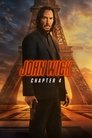
Director Chad Stahelski mapped Sergio Leone's The Good, the Bad and the Ugly directly onto the climax, three combatants approaching each other in a graveyard-like space (here, Sacré-Cœur in Paris), music swelling, time dilating. Stahelski also cited the Japanese Zatoichi blind swordsman films as the blueprint for Donnie Yen's character, the sense of a master assassin navigating the world through pure technique and memory.