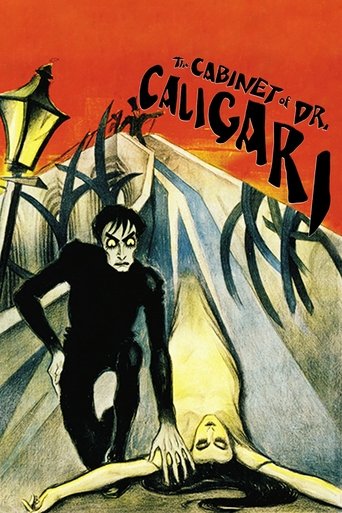
The Cabinet of Dr. Caligari
Films it shaped
-
It’s always been a special project for me. It relates to how I felt as a child, and those early influences like the Universal monster movies and also the German Expressionist films like 'The Cabinet of Dr. Caligari' – the black and white, the mood, the atmosphere.
-
Martin Scorsese screened Henri-Georges Clouzot's Les Diaboliques obsessively while developing Shutter Island. He needed to understand how Clouzot built paranoia without supernatural elements, the paranoia of the mind turning on itself, of memory as unreliable narrator. Clouzot's bathtub scene, the psychological claustrophobia, the way the camera moves through haunted domestic spaces, these became the exact template for Teddy Daniels' unraveling on the island. Scorsese cited this in a 2009 Sight & Sound interview. Les Diaboliques is available on Criterion Channel.
-
Batman Atlas note

Tim Burton told production designer Anton Furst to build Gotham from a single image, Robert Wiene's The Cabinet of Dr. Caligari (1920). The twisted walls, oppressive shadows, architecture that threatens its inhabitants, this is Weimar anxiety translated into Gotham. German Expressionism isn't decoration here. It's the psychology of the city itself.
-
Cape Fear Atlas note

Scorsese and cinematographer Freddie Francis embraced high-contrast shadows, canted angles, and distorted close-ups to create a look that Scorsese himself describes as 'German Expressionistic,' citing the influence of films like Robert Wiene’s The Cabinet of Dr. Caligari (1920) and Fritz Lang’s M (1931).
-
Batman Returns Atlas note

Tim Burton returned to German Expressionism for Batman Returns, specifically mining The Cabinet of Dr. Caligari for the visual language of psychological distortion. The Penguin's warped posture, the gothic architecture of Gotham that seems to move independently of physics, the shadows that are darker than black, Burton cited Wiene's film as proof that design itself could be a character. Burton showed his crew Caligari before pre-production. The twisted, oppressive world of Gotham is Expressionism made flesh.