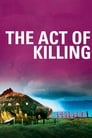
The Act of Killing
Where the DNA of The Act of Killing travels
Films that shaped it
-
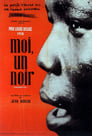
I would look to Jean Rouch as a precedent for me, [particularly] his films like Moi, un noir, Jaguar, Petit a petit, where he understood that every time you film anybody you're creating a reality with that person.
-
I also think Herzog, who is a documentary director I admire greatly, in particular his early work like Fata Morgana, Land of Silence and Darkness, and The Great Ecstasy of Woodcarver Steiner, has a way of approaching subjects in his documentaries that is very much about entering a dream space and a mythic space. His non-fiction is poetry in the guise of non-fiction. It’s always an exploration of the unconscious, of dreams, of myths. And that resonates deeply with what I try to do, especially in The Act of Killing, where the unconscious becomes the dominant space of the film.
-
Les Blank, for me, is just so profound... 'Burden of Dreams' is a masterpiece... it's a testament to the documentary as being a process of discovery.
-
How would I represent the present-day consequences of the genocide without representing the perpetrators? That’s what I learned from Lanzmann’s Shoah and Rithy Panh’s S21...
-
The filmmakers that I love most and have influenced me the most are people who’ve dared to do that: Buñuel, Herzog, and, in a very important way for me, Kiarostami, particularly with Close-Up, which is foundational for me in understanding how you use reconstruction and reenactment to explore identity, and the blurring of the line between documentary and fiction.
Films it shaped
-
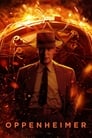
I watched Joshua Oppenheimer’s The Act of Killing. It’s a very unusual film. Joshua had this idea for a documentary where he tracked down the perpetrators of Indonesian death squads and asked them to re-enact their crimes... But it gives you a sense of the kind of power that some sort of re-enactment or fictionalization can have when you’re dealing with things where you can’t fully be journalistic or you can’t fully bring things to life in a way that gives people a true sense of them.
-
I always say that a film is successful if it takes you to a place you didn't think you could go, and that could be an emotional place, a mental place, a political place. And a film like The Act of Killing really took me there. I thought it was incredibly important in terms of opening up what documentary can be and what it can do. The idea of performance being tied to truth, of characters performing themselves in a way that reveals deeper truths, that was a huge impact on me and my work.