Seven Samurai
Where the DNA of Seven Samurai travels

Films it shaped
-
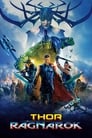
I was greatly influenced by Akira Kurosawa’s 'Seven Samurai.' I wanted to make a modern version of that film, focusing on the team dynamics and how each character contributes to the mission, creating a disparate group of individuals each with their own distinct characteristics and weapons, much like Kurosawa’s samurai.
-
The idea for me was that you had the potential for them to be an ally in a much bigger context. I looked at Seven Samurai and I looked at some of the things where you just had this group of people who are going to go protect others, and I kind of borrowed from that a little bit.
-
My film school professor said, 'The whole point of cinema is to make a movie about a man on a hill and when he leaves, the hill is still there.' We're talking about characters that transcend just a normal comic-book kind of story. That's why Seven Samurai is such a touchstone for me. You have this group of guys, they're all very well defined, and they go and they do their thing and the world is changed, but they leave and you go, 'Wait, what about them?'
-
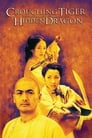
Hu himself acknowledged a debt to Kurosawa, particularly for 'Seven Samurai' (1954).
-
The central idea [of Aliens], that of a small band of well-armed men defending a perimeter against an overwhelming enemy force, is the most basic scenario of warfare. You find it in THE ALAMO and SEVEN SAMURAI and Zulu.
-
When we were studying at the Beijing Film Academy, we had access to many foreign films for the first time after the Cultural Revolution. For me, Akira Kurosawa was a huge revelation. His epic scale, the way he captured human drama against vast landscapes, and his powerful visual compositions deeply impressed me. When I was making Red Sorghum, I was consciously trying to infuse it with that kind of raw, epic energy, similar to what I felt watching films like Seven Samurai.
-
The core of our story, where a small colony is threatened and seeks help from outsiders, was definitely inspired by Akira Kurosawa's 'Seven Samurai'.
-
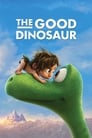
I told the story, which is basically 'Jaws' underwater with the characters from 'Seven Samurai,' to John Lasseter, and he thought it sounded great.
-
We certainly looked at Kurosawa. 'Seven Samurai' was a major touchstone, not just for the battles, but for the depth of character, and 'Ran' for its visual majesty and the way it deals with the end of an era. His work was an invaluable guide for us.
-
I also wanted to make a movie that really felt like a live-action film in its sensibility, in the way that it was staged, the lighting, the movement of the camera, all that kind of stuff. I was inspired by films like Raiders of the Lost Ark and North by Northwest, and things that I loved as a kid. There are also influences from films like Seven Samurai and Dr. Strangelove.
-
I looked at Kurosawa films like *Seven Samurai* and *Ran*, I looked at *Children of Men*, *The Road Warrior*, *No Country For Old Men*, and tried to just make a movie that felt real, that had a certain amount of scope, and a certain amount of character. And yes, in our minds, you can watch *Terminator Salvation* as a war movie, and it really functions on that level.
-
I pretty much rip off Kurosawa every chance I get, and you know, 'Seven Samurai' is what I consider to be the perfect motion picture. You have everything, structure, entertainment, profundity, it's all there, and that structure is pretty much the structure for 'The Avengers'.
-
With Age of Ultron, I specifically went in to try to take it apart a little bit... I went back to thinking about the great ensemble pieces like Kurosawa’s Seven Samurai or even more recent stuff like Nashville by Robert Altman.
-
We also looked at a lot of Kurosawa films, especially Seven Samurai and Rashomon, for their landscape photography and how they capture weather and light. A lot of that stuff was just inspirational for us to try and create the Pacific Northwest as a character in our film.
-
I looked at so many movies. I looked at Superman, which is my favorite film of all time, I looked at Seven Samurai, I looked at Casablanca, The French Connection, Raiders of the Lost Ark. And I looked at a lot of films. So I had a lot of different sources of inspiration.
-
We really studied a lot of Akira Kurosawa, especially 'Seven Samurai,' in terms of how he handles an ensemble and how he tracks arcs and how you make characters feel important even when there's 50 of them on screen.
-
And then of course, Kurosawa's movies, from 'Seven Samurai' to 'Ran,' were always deeply inspiring for the way he was portraying his characters, the scope, the scale, but also the human aspect of it all.
-
Director Chad Stahelski mapped Sergio Leone's The Good, the Bad and the Ugly directly onto the climax, three combatants approaching each other in a graveyard-like space (here, Sacré-Cœur in Paris), music swelling, time dilating. Stahelski also cited the Japanese Zatoichi blind swordsman films as the blueprint for Donnie Yen's character, the sense of a master assassin navigating the world through pure technique and memory.
-
Witness Atlas note
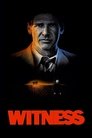
On the film's audio commentary, Peter Weir explicitly discusses how he studied Akira Kurosawa's 'Seven Samurai' and 'Yojimbo' for their masterful pacing, the way they build tension, and the narrative of an outsider integrating into and defending a closed community. These films significantly influenced the suspense and rhythm he sought in 'Witness'.
-
Unforgiven Atlas note
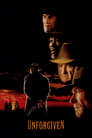
Clint Eastwood built Unforgiven as a reckoning with the films that made him famous, specifically Sergio Leone's Spaghetti Westerns, which were themselves remakes of Kurosawa's samurai films. Leone took Yojimbo and made A Fistful of Dollars. Eastwood played the character. Decades later, he made Unforgiven to ask what that character actually was: not a hero, a mechanism of violence given a moral costume. Yojimbo is where it started.
-
Peter Jackson studied Kurosawa's Seven Samurai to understand how to shoot desperate, ragged warfare, the kind where mud and exhaustion matter as much as choreography. The Battle of Pelennor Fields learned from Kurosawa's understanding that beauty and brutality can exist in the same frame. Jackson documents this explicitly in the Appendices of the extended edition. Seven Samurai taught him that epic action requires humans who get tired, who hesitate, who fail. The film is streaming on Criterion Channel.
-
X-Men: Days of Future Past Atlas note

Bryan Singer stated that Akira Kurosawa's 'Seven Samurai' was a significant influence on 'X-Men: Days of Future Past,' particularly for 'the way in which disparate individuals come together for a task' to save the future, a core element of the film's narrative.
-
Mad Max: Fury Road Atlas note

George Miller screened Kurosawa's Yojimbo for his entire crew before production began on Fury Road, a 1961 Japanese film about a nameless masterless samurai who walks into a town being destroyed by two warring factions and plays them against each other. Max Rockatansky is Yojimbo. The same film became A Fistful of Dollars when Leone remade it. Miller understood that Kurosawa had discovered something about the moral geometry of the lone warrior that survived any genre.
-
Justice League Atlas note

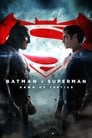
Zack Snyder formally stated in 2016 press that Seven Samurai is the definitive structural template for Justice League, a lone warrior gathering disparate heroes to defend civilization from an unstoppable invasion. Kurosawa architected this narrative in 1954. Snyder acknowledged the debt explicitly, understanding that the best blockbuster DNA often comes from world cinema. Seven Samurai is available on Criterion Channel.
-
Dune: Part Two Atlas note
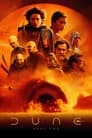
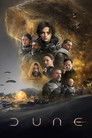
Denis Villeneuve cited Kurosawa's mastery of framing large groups of people within epic landscapes as the direct visual blueprint for the Fremen massing in the deep desert. Kurosawa understood that you could show hundreds of people and maintain absolute visual clarity about their placement and intention. Dune: Part Two learned this lesson obsessively. Seven Samurai is available on Criterion Channel.