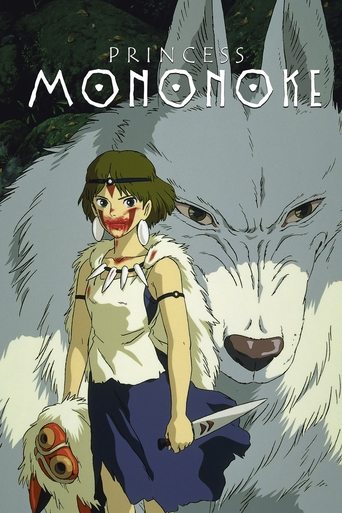
Princess Mononoke
Films it shaped
-
I think a lot of my creature work comes from a place of love and adoration – like the way Hayao Miyazaki loves nature and makes these creatures that are part of nature, or Princess Mononoke, where the gods are part of nature and they’re decaying. I love that idea, and that was certainly a guiding principle for the Forest God in Hellboy 2.
-
In 2017 interviews, director Jordan Vogt-Roberts cited Bong Joon-ho's The Host (2006) as the template for the Skullcrawlers, creatures designed not as monsters but as displaced inhabitants. Vogt-Roberts studied Miyazaki's Princess Mononoke for how to treat the island's fauna with spiritual reverence, the collision between nature and human conquest. The result is a blockbuster that breathes like an ecology film.
-
DeBlois: ...definitely a lot of those touchstone films from the 80s like E.T., The Black Stallion, The Neverending Story, and then some of the Hayao Miyazaki films, like Princess Mononoke and Spirited Away, for their emotional intelligence and the fact that they don’t dumb down the material for a younger audience, and that the stakes feel real and compelling.
-
Avatar Atlas note
James Cameron grounded Pandora in a visual tradition decades old: the Japanese animation of Hayao Miyazaki, where nature is sacred, human industrialization is violation, and the camera moves through landscapes with spiritual reverence. Cameron screened Princess Mononoke repeatedly while developing Avatar's ecosystem, absorbing Miyazaki's understanding that ecological collapse is tragedy, not spectacle. The shared DNA runs through environmental mythology, through the reverence for what we destroy. Available on Criterion Channel.