Le Samouraï
Where the DNA of Le Samouraï travels
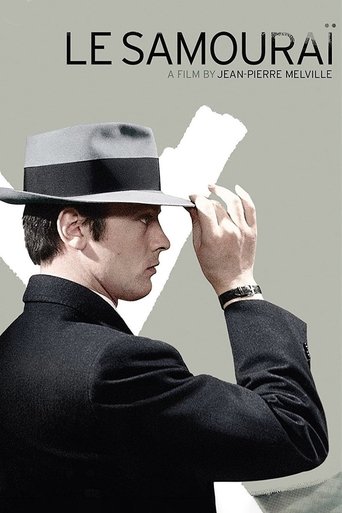
Films it shaped
-
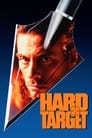
I was really honored to direct a film in America, because it was a dream when I was young. I like those American Western movies, and I also watched some French new wave movies. My favorite director is Jean-Pierre Melville. He makes films like Le Samouraï, Bob le Flambeur. So I learned a lot from him. And also I love Japanese movies, Akira Kurosawa movies. So that’s why I created this style, like in The Killer, Hard Boiled. So when I got to America, I still tried to use my own style, and to combi
-
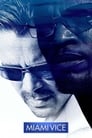
Films like Jean-Pierre Melville’s Le Samouraï [1967] and Army of Shadows [1969] or the works of Gillo Pontecorvo, particularly The Battle of Algiers [1966], have always been touchstones for me in terms of creating that level of immersive realism, especially when approaching something like Miami Vice.
-
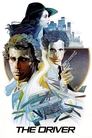
I was influenced by Melville, sure. Le Samouraï is a classic. That idea of the lone, professional man, living by his own rules, that’s deep in The Driver.
-
Le Samourai, the Jean-Pierre Melville film, was certainly an inspiration, and certainly the French gangster films in general.
-
Jean-Pierre Melville is a director I have enormous respect for. Le Samouraï in particular, the character of Alain Delon’s hitman, his stoicism, his commitment to his professional code, it’s all very elemental and profound, and that’s something that certainly informs my work, from Thief to Heat.
-
Melville, certainly. Le Samouraï... He’s the first one that just takes the procedures and rituals of these closed societies and makes them the actual narrative. That's very influential on me.
-
I remember watching 'Die Hard' and being blown away by the craft of it all. The simplicity of the premise, the gradual escalation of the threat, the way the character is completely isolated, physically and emotionally. All those things definitely stuck with me when I was developing 'The Raid'.
-
I've always said that Jean-Pierre Melville and Sergio Leone are my two favorite directors. They taught me how to put humanity into action movies. That's why my movies are different from a lot of action movies.
-
People keep bringing up Melville’s Le Samouraï and I love that movie. But it was not something I consciously ripped off. I thought about it later, and of course it has a stoic hitman and it has a hawk. Our main character Ghost Dog has pigeons.
-
But it’s also influenced a lot by certain kind of French film. You know, like Jean-Pierre Melville, Le Samouraï and stuff like that. And then by kind of Sergio Leone, spaghetti westerns.
-
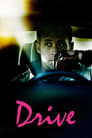
Nicolas Winding Refn crafted Drive as an intoxicating, neon-drenched fairy tale, but its stoic soul belongs entirely to the French cinematic tradition of the ultra-cool, ascetic criminal. Refn and star Ryan Gosling obsessively studied Jean-Pierre Melville's Le Samouraï, borrowing Alain Delon's deadpan silence and the mythological code of an underworld phantom who speaks only when absolutely necessary. The film's deliberate, hypnotic pacing and fascination with solitary men navigating fatalistic systems is further reinforced by Melville's Le Cercle Rouge. By bathing the clinical detachment of the French New Wave era in a synth-pop, Los Angeles glow, Refn orchestrated a mesmerizing explosion of romantic brutality.
-
I was inspired by films by Jean-Pierre Melville – Le Samouraï, Le Cercle Rouge – and films by Nicholas Ray, like In a Lonely Place, where the protagonist is isolated, a kind of noble outcast, even a kind of monster, but you sympathise with them. And then Nagisa Ōshima's Empire of Passion, and Jacques Tourneur's Cat People. I also watched Mizoguchi's Ugetsu Monogatari, and Carl Theodor Dreyer's Vampyr, of course.
-
All these things from my early films, like loyalty, friendship, the relationship between men, and the good and evil, those themes came from the French film Le Samouraï by Jean-Pierre Melville...
-
It’s certainly an antihero, but there’s a nobility to him that I think in a weird way makes him similar to Alain Delon’s character in Jean-Pierre Melville’s Le Samouraï.
-
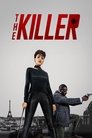
The Killer Atlas note

The influence of John Woo's The Killer is there, in the way they're shot, the camera's often quite high and swooping.
-
No Country for Old Men Atlas note
Anton Chigurh is Kurosawa's samurai without a code, pure violence untethered from honor. The Coen Brothers have cited Kurosawa throughout their career, and No Country for Old Men shares his understanding that evil operates by its own internal logic. Jean-Pierre Melville's Le Samouraï, a French crime film about a professional killer of absolute precision, is the closer ancestor for Chigurh's frightening calm. Le Samouraï is on Criterion Channel and is one of the coolest films ever made.
-
Mission: Impossible - Rogue Nation Atlas note
Christopher McQuarrie made his crew obsess over Jean-Pierre Melville's Le Samouraï, the quiet precision, the icy professionalism, the trench-coat silhouette of the assassin. Ilsa Faust is Alain Delon's samurai remade as a woman. The Vienna opera sequence pulls from Bernardo Bertolucci's visual sophistication. McQuarrie documented this in the DVD commentary, understanding that spycraft requires the aesthetic of European cool. Both films are on Criterion Channel.