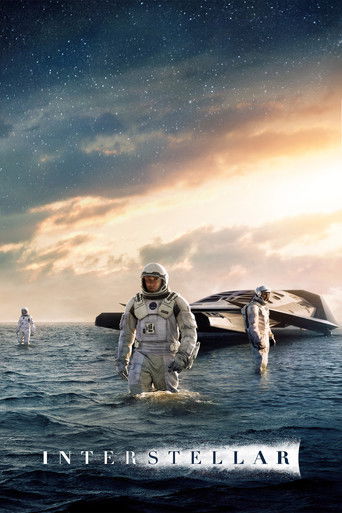
Interstellar
Where the DNA of Interstellar travels
Films that shaped it
-
Wikidata structured statement: "Interstellar" influenced by (P737) "The Right Stuff". Reference: https://web.archive.org/web/20141031170404/http://blogs.indiewire.com/thompsononhollywood/interstellar-q-a-nolan-set-out-to-make-modern-day-close-encounters-20141029
-
While Interstellar operates on a massive, theoretical canvas of relativity and black holes, Christopher Nolan anchored the film's emotional core in the devastating, metaphysical grief of Russian cinema. Nolan required his crew to screen Andrei Tarkovsky's Solaris, specifically aiming to replicate its assertion that human love and regret are forces just as powerful and tangible as gravity. He further drew upon Tarkovsky's The Mirror to conceptualize the profound, non-linear distortion of time, translating the persistence of childhood memory into a literal, physical dimension inside the tesseract. By grounding cosmic astrophysics in the intimate, poetic melancholy of the Soviet masters, Nolan created a wildly ambitious epic of the human heart.
-
Solaris Atlas note

While Interstellar operates on a massive, theoretical canvas of relativity and black holes, Christopher Nolan anchored the film's emotional core in the devastating, metaphysical grief of Russian cinema. Nolan required his crew to screen Andrei Tarkovsky's Solaris, specifically aiming to replicate its assertion that human love and regret are forces just as powerful and tangible as gravity. He further drew upon Tarkovsky's The Mirror to conceptualize the profound, non-linear distortion of time, translating the persistence of childhood memory into a literal, physical dimension inside the tesseract. By grounding cosmic astrophysics in the intimate, poetic melancholy of the Soviet masters, Nolan created a wildly ambitious epic of the human heart.
-
The Mirror Atlas note

While Interstellar operates on a massive, theoretical canvas of relativity and black holes, Christopher Nolan anchored the film's emotional core in the devastating, metaphysical grief of Russian cinema. Nolan required his crew to screen Andrei Tarkovsky's Solaris, specifically aiming to replicate its assertion that human love and regret are forces just as powerful and tangible as gravity. He further drew upon Tarkovsky's The Mirror to conceptualize the profound, non-linear distortion of time, translating the persistence of childhood memory into a literal, physical dimension inside the tesseract. By grounding cosmic astrophysics in the intimate, poetic melancholy of the Soviet masters, Nolan created a wildly ambitious epic of the human heart.




Films it shaped
-
And then Nolan came out with 'Interstellar,' and that film did, it really kind of affected my film in a bit of a way because I was already moving toward some of the scientific realism of it, and then I saw what Nolan was doing, and I thought, 'Oh man, I got to really make sure this thing holds up.'