In the Mood for Love
Where the DNA of In the Mood for Love travels
Films that shaped it
-
Wong cited Michelangelo Antonioni’s L’Avventura (1960) and Le Mépris (1963) as key touchstones for his storytelling approach and the use of space as an emotional landscape.
-
I’ve probably seen In the Mood for Love more than 50 times. I really had to learn how to fall in love with the camera all over again, and that’s a film that reminds you that you don’t need plot, you just need mood and character.
-
Jules and Jim Atlas note
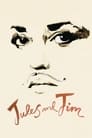
I’ve probably seen In the Mood for Love more than 50 times. I really had to learn how to fall in love with the camera all over again, and that’s a film that reminds you that you don’t need plot, you just need mood and character.
-
L’Eclisse Atlas note
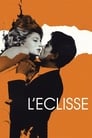
I’ve probably seen In the Mood for Love more than 50 times. I really had to learn how to fall in love with the camera all over again, and that’s a film that reminds you that you don’t need plot, you just need mood and character.







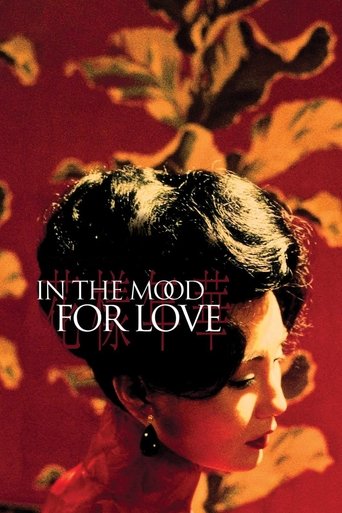
Films it shaped
-
Barry Jenkins has cited Claire Denis's Beau Travail as a foundational influence, the film that showed him how to use the body, light, and music as primary storytelling tools rather than dialogue. Moonlight's fragmented structure, its use of color as emotion, its willingness to let silence carry meaning, these are lessons from Denis and Wong Kar-wai. Beau Travail is streaming on Criterion Channel and is one of the most beautiful films ever made.
-
I really love Wong Kar-wai, of course. I’m thinking of In the Mood for Love and its sense of touch, the way bodies are filmed. That’s very inspiring.
-
I talked a lot about 'In the Mood for Love' in terms of the score, how it just has this absolutely grand, romantic, emotionally swooning music that makes it feel much bigger than its intimate story would otherwise suggest. I was not going to be afraid to go for that.
-
I think the films of Wong Kar-wai, especially 'In the Mood for Love,' deeply influenced the way I think about depicting relationships and inner worlds without relying on explicit verbal communication.
-
Wong Kar-wai’s ‘In the Mood for Love’ is a movie I just love, and I feel like it’s a great example of being able to tell a story with a lot of longing and a lot of melancholy without needing very explicit dialogue.
-
Lost in Translation Atlas note

Sofia Coppola has said she wanted Lost in Translation to feel like a Wong Kar-wai film set in Tokyo, the same grammar of longing, the same two people in a city who almost connect and then don't. In the Mood for Love is the direct model: desire as proximity, missed by centimeters. Ozu's Tokyo Story is the other ancestor, the city as a place where people pass each other in corridors without ever really meeting.
-
Her Atlas note

Her is Wong Kar-wai's In the Mood for Love reimagined as near-future science fiction. Spike Jonze has cited Wong extensively, the longing, the missed connections, the way time and memory warp desire, the use of color and texture as emotional registers. Theodore Twombly and Samantha's relationship has the same impossible quality as Tony Leung and Maggie Cheung across a thin wall, present and absent simultaneously. In the Mood for Love is on Criterion Channel and is one of the great romantic films ever made.
-
Call Me by Your Name Atlas note
Luca Guadagnino has cited Pier Paolo Pasolini's Teorema, a 1968 Italian film in which a mysterious stranger arrives and seduces every member of a bourgeois family, as the direct narrative model for what happens between Elio and Oliver that summer. Wong Kar-wai's influence is everywhere in the texture: desire as something felt in light and fabric before it's understood as feeling. Teorema is on MUBI and will change how you read the film.