Blow-Up
Where the DNA of Blow-Up travels
Films it shaped
-
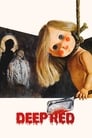
Deep Red which was Argento's reimagining of Antonioni's 1966 arthouse classic Blowup, also starring David Hemmings.
-
Hopper and Fonda were steeped in the methods of the French New Wave, whose films they openly admired, drawing inspiration from (...) Michelangelo Antonioni's Blow-Up (1966) for Easy Rider's improvisational style, jump cuts, and vérité cinematography.
-
Yes, Blow Up. I've watched it several times. I like how it questions the nature of perception and reality.
-
I’ve always thought it would be interesting to do a film about someone whose reality is so distorted. Films like Michelangelo Antonioni’s ‘Blow-Up’ (1966) and Alan Pakula’s ‘The Parallax View’ (1974) were big influences on me, in terms of creating that sense of paranoia and questioning reality.
-
I’m also very much an admirer of Antonioni’s Blow-Up, which is also a film where the main character is trying to see things more clearly. I think my films contain a lot of such characters, who have this obsession with seeing, with finding out the truth.
-
Yes, and I was deeply influenced by Antonioni’s ‘Blow-Up’ and ‘Zabriskie Point’ for the overall mood and aesthetic of the film, particularly the way they captured the hedonism and ennui of the time.
-
Greta Gerwig has said she watched Jacques Demy's 1964 French musical The Umbrellas of Cherbourg, a film where every word is sung, every surface is saturated with color, and understood immediately what Barbieland should be: a world where artifice isn't dishonesty, it's the only language adequate to feeling. Demy's films are devastating precisely because they're beautiful. The same sadness hides inside Barbie.
-
The Conversation Atlas note
Yes, 'The Conversation' is a film that I often mention. The way it uses sound and silence to build suspense and character is just masterful. It’s one of those films that really broadened my understanding of cinematic language.