Akira
Films it shaped
-
I mean, Akira has influenced many filmmakers, including myself. That film for me, it's like, it's just the scale of it and the ideas are so vast. And it's just really, really good.
-
I also wanted to capture some of the color and the vibrancy of things like Flash Gordon and Big Trouble in Little China. And I always loved Akira, I loved the way the animation in that film was handled. We’ve really tried to go for a vibrant and colorful world in Ragnarok.
-
Before the Wachowskis wrote a single line of The Matrix, they flew to Hong Kong. John Woo's Hard Boiled, its lobby shootout, its operatic slow-motion, its bodies used as instruments of pure cinematic force, became the template. Yuen Woo-ping, who choreographed every action sequence in The Matrix, had been working in Hong Kong action cinema for two decades. The bullet time isn't science fiction. It's John Woo made digital.
-
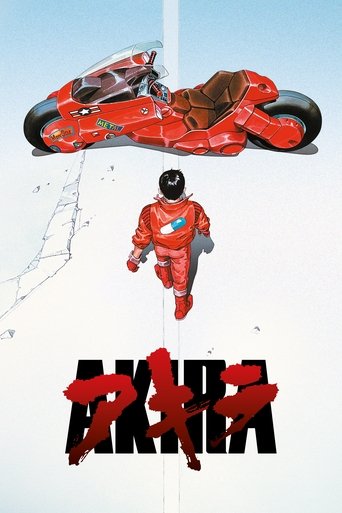
or the light trails from the cars like in Akira.
-
I was looking at a lot of graphic novels. A lot of comic book art. Stuff like Akira just for the visual landscape. And then a lot of photographs.
-
That movie is the foundation of so many things in modern cinema. From how it does scale to how it does body horror to how it does scope and design. Every time I watch ‘Akira’, there’s always something new I appreciate about it, in terms of animation, design, scale or narrative. The design of that film is just unbelievable. I look at things like Akira [...] and things that have a larger than life sense of scale. A lot of those anime films just have a scope that I think sometimes live-action cinema is afraid to lean into.
-
The film really is a love letter to animation and comic books… We wanted to see all kinds of animation techniques in here. Not just the American style, but things like anime. So we looked at everything from Akira to Spirited Away, and even went back to early hand-drawn Warner Bros. cartoons.
-
The directing trio pulled directly from Katsuhiro Otomo's Akira, the neo-futuristic neon cityscape, the motorcycle slide, the saturated color palette suggesting a world that's both beautiful and collapsing. Miguel O'Hara's dimension is Akira remade as superhero universe. The film's art book documents this obsessively. Akira remains the visual blueprint for how to animate future cities. It's available on Criterion Channel.
-
The Matrix Revolutions Atlas note

The Wachowskis cited Katsuhiro Otomo's Akira (1988) as the direct visual blueprint for the climax, the massive battle between Neo and Smith featuring energy bursts, flying debris, cities transforming into abstractions. The final confrontation between Kaneda and Tetsuo in Akira, two characters whose powers unmake reality itself, became the template for digital resurrection and the dissolution of the boundary between code and consciousness.
-
Puss in Boots: The Last Wish Atlas note

Director Joel Crawford cited Katsuhiro Otomo's Akira (1988) for its kinetic visual language, neon cityscapes, explosive action, characters moving through space with almost impossible velocity. He also drew from Leone's The Good, the Bad and the Ugly for the pacing of standoffs, the stretched tension before violence. The result is an animated film that pulses with the energy of cyberpunk manga and Italian Westerns.